
Paytm had received the approval for brokerage services from market regulator Sebi in January this year.

Sebi on Wednesday ordered the attachment of bank and demat accounts of Sahara Group chief Subrata Roy and three others to recover Rs 6.48 crore for violating regulatory norms by two group companies. The recovery proceedings have been initiated against these four persons for violating regulatory norms in the issuance of optionally fully convertible debentures (OFCDs) by two group companies. Apart from Sahara, others whose bank and demat accounts were attached are Ashok Roy Choudhary, Ravi Shanker Dubey and Vandana Bharrgava.

Renaissance Technologies, the world's largest hedge fund firm handling assets worth $35.4 billion (Rs 1,41,600 crore), has received approval from the Securities and Exchange Board of India to operate in the Indian stock markets as a foreign institutional investor.

Despite the national capital recording its best air quality on Diwali day in eight years, pollution levels may rise due to low night temperatures and sporadic burning of firecrackers though there is a ban on their manufacture, storage, sale and use within the city.

Here's a look at how the new corporate governance norms will affect India Inc boardrooms.

Mutual funds (MFs) are lining up distinguished new fund offerings (NFOs) for the next financial year to win over investors after a lukewarm response to product launches in the 2022-23 financial year (FY23). NFOs drew a lukewarm response in FY23 as launches were mostly in the passive debt space, which has a comparatively lower popularity among retail investors. The limited launches in equity space also failed to rake in huge sums due to subdued investor sentiments in a volatile market.

Markets regulator Sebi has empanelled as many as 16 entities -- including BDO India, Ernst & Young and Deloitte Touche Tohmatsu India -- for conducting forensic audits of financial statements of listed companies as part of efforts to curb frauds. The other empanelled entities are -- Chaturvedi & Co, Chokshi & Chokshi LLP, Grant Thornton Bharat LLP, Haribhakti & Co. LLP, KPMG Assurance And Consulting Services LLP, Mukund M Chitale & Co and Protiviti India Member Pvt Ltd, according to a public notice. In addition, Rajvanshi & Associates, Ravi Rajan & Co LLP, SKVM & Company, Suresh K Jha & Co, T R Chadha & Co LLP and V Singhi & Associates have been selected to conduct the forensic audits, it added.

Naresh Goyal-led Jet has also changed the shareholders agreement and amended the investment agreement and the articles of association, as suggested by the Foreign Investment Promotion Board, headed by DEA Secretary Arvind Mayaram, official sources said.

Existing mutual fund investors have time till March 31 to nominate a beneficiary or opt out of it by submitting a declaration form, failing which their folios will be frozen, and they will not be able to redeem investment. The Securities and Exchange Board of India (Sebi), in its circular on June 15, 2022, made it mandatory for mutual fund subscribers to submit the nomination details or declaration to opt out of the nomination on or after August 1, 2022. Later, the deadline was extended to October 1, 2022.

Sundararaman Ramamurthy has been an interesting choice for the publicly-listed BSE, which has seen its chief move to bigger rival -- the National Stock Exchange (NSE) -- in July. Having spent nearly two decades at the country's largest bourse, Ramamurthy is among the early architects of NSE and understands all the cogs of the exchange wheel like only a few others in the country. Just like NSE's core team, which includes its founder RH Patil, the 59-year-old Ramamurthy has worked at the Industrial Development Bank of India (IDBI) before moving to NSE in 1995.

The National Stock Exchange (NSE) has got into firefighting mode to control the reputational damage caused by the Securities and Exchange Board of India's (Sebi's) order against its former managing director and chief executive officer Chitra Ramkrishna and others. According to sources, the exchange's management over the past one week has met several key stakeholders, including officials in the finance ministry and Sebi, major shareholders, and trading members, trying to distance itself from the controversy. The exchange plans to hold more meetings in the coming week to ensure that trading volumes and confidence in the bourse don't get impacted, they added.
World's largest fund house Fidelity, which manages assets worth $1.2 trillion, has got an approval from securities and Exchange Board of India for launching mutual funds in India.

The rot is is not limited to Chitra Ramkrishna and the yogi, observed Debashis Basu.
A survey showed as much as 95 per cent of CEOs and MDs were against Sebi's mandatory guidelines the company's to declare their quarterly performance, Assocham said in a statement.

State-run Coal India is likely to file the red herring prospectus for its initial public issue, through which the government is expecting to raise about Rs 15,000 crore (Rs 150 billion), on September 25.
Securities and Exchange Board of India on Tuesday said it would introduce Indian depository receipts (on the lines of American Depository Receipts or Global Depository Receipts

Zaggle Prepaid, Cyient DLM, Healthvista India, Rashi Peripherals and Vishwaraj Sugar Industries have obtained the green signal to launch their initial public offerings (IPOs). The approvals come at a time when capital raising by way of IPOs has slowed to a crawl, with only four issues hitting the market so far this calendar year. Recently, the Securities and Exchange Board of India (Sebi) issued final observation letters on their draft red herring prospectuses (DRHPs), which is akin to getting approval to hit the markets.

Some unions have opposed EPFO investing in share markets.

The Delhi high court on Friday sought response from the Central Bureau of Investigation (CBI) on the bail plea by former managing director and chief executive officer of the National Stock Exchange (NSE) Chitra Ramkrishna in connection with the co-location case. Justice Sudhir Kumar Jain issued notice on the bail application and listed the case for further hearing on May 31. The trial court had dismissed the bail plea of the former NSE boss on May 12 and said that no ground for bail was made out at this stage.

The Congress on Wednesday said the Supreme Court judgment on certain matters relating to transactions by the Adani Group has proven to be 'extraordinarily generous' to Securities and Exchange Board of India (SEBI) and asserted that the party's fight against crony capitalism and its ill-effects on prices, employment and inequalities will continue.
Capital markets regulator Sebi on Tuesday sent a notice to NSE's former chief Chitra Ramkrishna asking her to pay Rs 3.12 crore in a case related to governance lapses at the stock exchange, and warned of arrest and attachment of assets and bank accounts if she fails to make the payment within 15 days. The notice came after Ramkrishna failed to pay the fine imposed on her by the Securities and Exchange Board of India (Sebi). In an order dated February 11, Sebi had slapped a penalty of Rs 3 crore on Ramkrishna for alleged governance lapses in a case related to the appointment of Anand Subramanian as the Group Operating Officer and Advisor when she was at the helm of NSE as its managing director and chief executive officer, as well as for sharing confidential information of the company with an unidentified person.
India is now clearly in the radar of the global hedge fund industry after recent statements by the Securities and Exchange Board of India favoured the direct entry of long-term hedge funds.
In the context of market integrity, the IRAI and RBI should go over the minutes of the LIC and SBI board meetings when the decisions to invest in Adani equity or debt were taken, notes Jaimini Bhagwati, former World Bank treasury professional.

Sebi on Thursday sent a notice to fugitive businessman Mehul Choksi asking him to pay Rs 5.35 crore in a case pertaining to fraudulent trading in the shares of Gitanjali Gems Ltd and warned of arrest and attachment of assets as well as bank accounts if he fails to make the payment within 15 days. The demand notice came after Choksi failed to pay a fine imposed on him by the Securities and Exchange Board of India (Sebi). Choksi, who was the chairman and managing director as well as part of promoter group of Gitanjali Gems, is the maternal uncle of Nirav Modi.
India Inc seems to be doing a good job of protecting investors' interests following a crackdown by the market regulator earlier this year, as the number of complaints relating to non-receipt of refunds and allotment letters have nearly halved.

Oravel Stays - which operates hospitality tech firm OYO - on Friday pre-filed its Draft Red Herring Prospectus with stock market regulator Sebi, sources said. Sources close to the company told PTI, OYO may launch its initial public offering (IPO) around Diwali this year. Unlike the traditional route where companies have to launch the IPO within 12 months from the Sebi approval, or final observation; in the pre-filing route, an IPO can be floated within 18 months from the date of Sebi's final comments.

Sebi on Tuesday sent a notice to 7 entities, including Malvinder and Shivinder Mohan Singh, asking them to pay Rs 48.15 crore within 15 days in a fund diversion case of Religare Finvest. Sebi also warned of attachment of assets and bank accounts, if they fail to make the payment. The notice came after the entities failed to pay the fine imposed on them by the Securities and Exchange Board of India (Sebi).

The initial public offering (IPO) market has seen some momentum of late with robust responses to recent issues. However, only some have been able to ride the wave. So far in 2023, 23 companies have let their approval granted by the markets regulator - the Securities and Exchange Board of India (Sebi) - lapse.

He is appointed as a public interest director.

Stay orders keep law out of citizen access even years after CIC rulings on opening market institutions to scrutiny

Traditionally, financial institutions have operated risk functions in silos. However, the nature of unknown threats today requires industry participants to work together, says Vikram Limaye.

More than a dozen entities, both domestic and foreign, had come under the regulatory glare over alleged short-selling before and after the publication of the Hindenburg research report against Adani Group, two people familiar with the development said. The Securities and Exchange Board of India (Sebi), which is examining the rise in stock values of Adani Group in the past few years, is also scrutinising the trade data and trade pattern of these entities allegedly involved in short-selling and made significant profit. Enquiries in the trade pattern of these entities reflected a profit of over Rs 30,000 crore, pre- and post-Hindenburg saga, said one of the two people.

The impact of currency depreciation can also be mitigated by holding a portion of your investment portfolio in dollar-denominated assets.

Both the exchanges advised their trading members to exercise additional due diligence while trading in illiquid stocks either on own account or on behalf of their clients.

The undistributed funds totalling over Rs 25,000 crore lying with the capital markets regulator Sebi's account have come back into focus after the demise of Sahara Group's chief Subrata Roy. Roy passed away in Mumbai on Tuesday night at the age of 75 after battling a prolonged illness. He faced multiple regulatory and legal battles in connection with his group firms that were accused of circumventing regulations with ponzi schemes, allegations his group always denied.
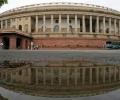
The government would take a number of steps to energise and deepen the country's corporate bond as well as currency derivatives market.
India should become a regional hub for financial services and constantly engage in new activities to sustain economic growth, Union Finance Minister Jaswant Singh said on Thursday.

The government should take steps to mandate that companies have at least two women board members, and at least one of them should be an independent director, in the next two years.
